Is your plumber not picking up your call? or you’re doing something on your own? And for that reason you should know basic plumbing abbreviation To understand plumbing. One most common abbreviation is FIP. Some beginners and many homeowners really wonder, What does FIP mean in plumbing?
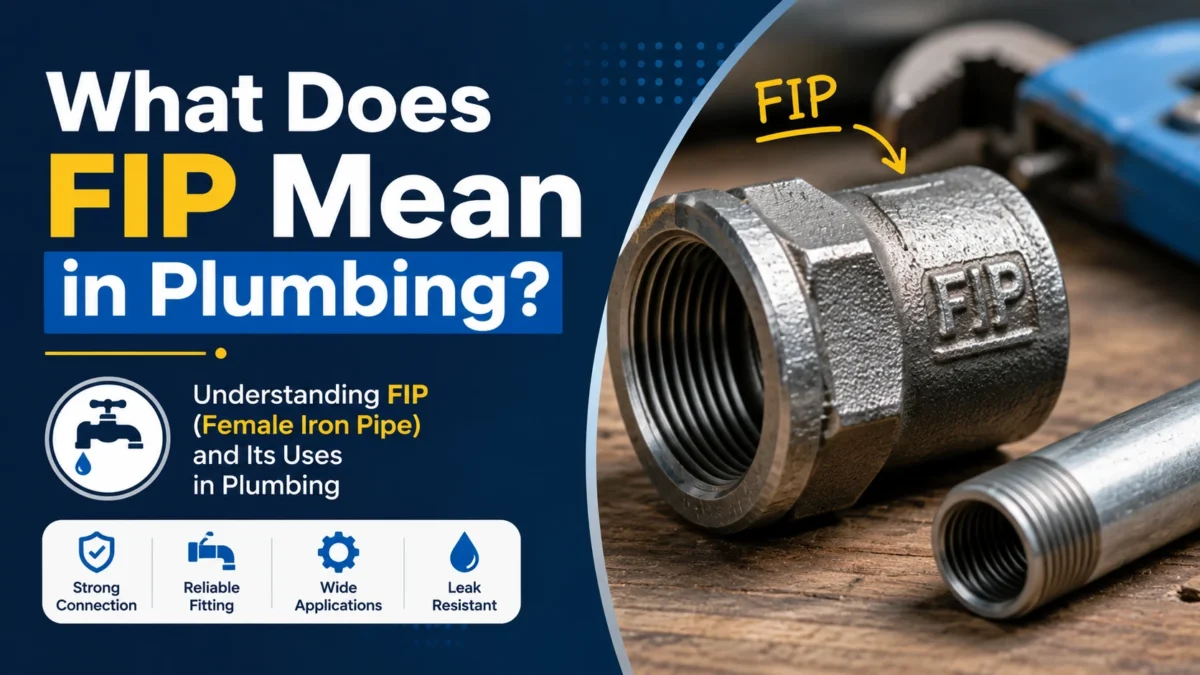
Simply put, FIP stands for Female Iron Pipe. It refers to a fitting that has internal threads designed to connect with a male threaded pipe or fitting.
FIP fittings are commonly used with PVC, brass, copper, stainless steel, galvanized steel, and PEX plumbing systems. The term comes from older plumbing standards and doesn’t mean the fitting must be made of iron.
In this guide, I’ll be explaining everything you need to know about FIP fittings, how they work, where they’re used, and more.
What Is an FIP Fitting?
An FIP fitting is a plumbing connector with female threads located inside the fitting.
These internal threads screw onto the external threads of a Male Iron Pipe (MIP) fitting to create a safe and secure connection.
Think of it like this:
- FIP = Female threads (inside)
- MIP = Male threads (outside)
Both work together just like a nut & bolt.
Why Is It Called Female Iron Pipe?
This term originated many years ago when most plumbing systems used cast iron or some old galvanized iron pipes.
Today, as we know, plumbing materials have changed, but the terminology has remained the same.
Modern FIP fittings are available in:
- Brass
- PVC
- CPVC
- Stainless steel
- Bronze
- PEX adapters
- Polypropylene
So, don’t worry, the fitting doesn’t have to be made from iron.
But…. How Does an FIP Connection Work?
An FIP fitting contains internal threads that twist onto the external threads of an MIP fitting.
The connection becomes watertight by using:
- PTFE (Teflon) thread tape
- Pipe thread sealant (pipe dope)
- Proper tightening
These sealants help prevent leaks by filling tiny gaps between the threads.
Common Uses of FIP Fittings
FIP fittings are used throughout the house plumbing systems.
Some common applications include:
- Water Supply Lines – Kitchen sinks, bathroom sinks, washing machines, and toilets often use FIP connections.
- Water Heaters – Many water heater inlet and outlet connections use FIP threads.
- Outdoor Hose Bibs – Exterior faucets commonly have FIP threaded adapters.
- Shower Plumbing – Mixing valves and shower components frequently include FIP ports.
- Irrigation Systems – PVC irrigation fittings often feature female threaded connections.
- Gas Lines – Certain gas piping systems also use threaded FIP-style fittings (only where permitted by local plumbing codes).
Materials Available for FIP Fittings
Depending on the application, FIP fittings come in different materials.
| Material | Best For |
| Brass | Indoor water supply |
| PVC | Cold water systems |
| CPVC | Hot water plumbing |
| Stainless Steel | Commercial and industrial systems |
| Galvanized Steel | Older plumbing systems |
| Bronze | Marine applications |
FIP vs MIP
One of the biggest sources of confusion is the difference between FIP and MIP.
| FIP | MIP |
| Female threads | Male threads |
| Threads are inside | Threads are outside |
| Receives male fitting | Inserts into female fitting |
| Cannot connect directly to another FIP | Cannot connect directly to another MIP |
In simple terms:
FIP screws onto MIP.
How to Install an FIP Fitting?
Follow these basic steps:
- Clean the male threads.
- Wrap PTFE thread tape clockwise 3–4 times.
- Screw the FIP fitting on by hand.
- Tighten using the proper wrench.
- Avoid overtightening.
- Test for leaks after turning the water back on.
Final Thoughts
I hope that you get an idea of what FIP means in plumbing, you’ll have an easier time choosing the correct fittings for your plumbing project.
Remember these key points:
- FIP = Female Iron Pipe
- Has internal threads
- Connects to MIP (Male Iron Pipe)
- Usually uses NPT thread standards
- Available in brass, PVC, stainless steel, CPVC, and other materials
- Commonly used in residential and commercial plumbing
Understanding these basic plumbing terms can save time, prevent buying the wrong fittings, and make DIY plumbing projects much easier.
Also Read:
Plumbing Marketing Ideas: 20 Proven Strategies to Grow Your Plumbing Business in 2026