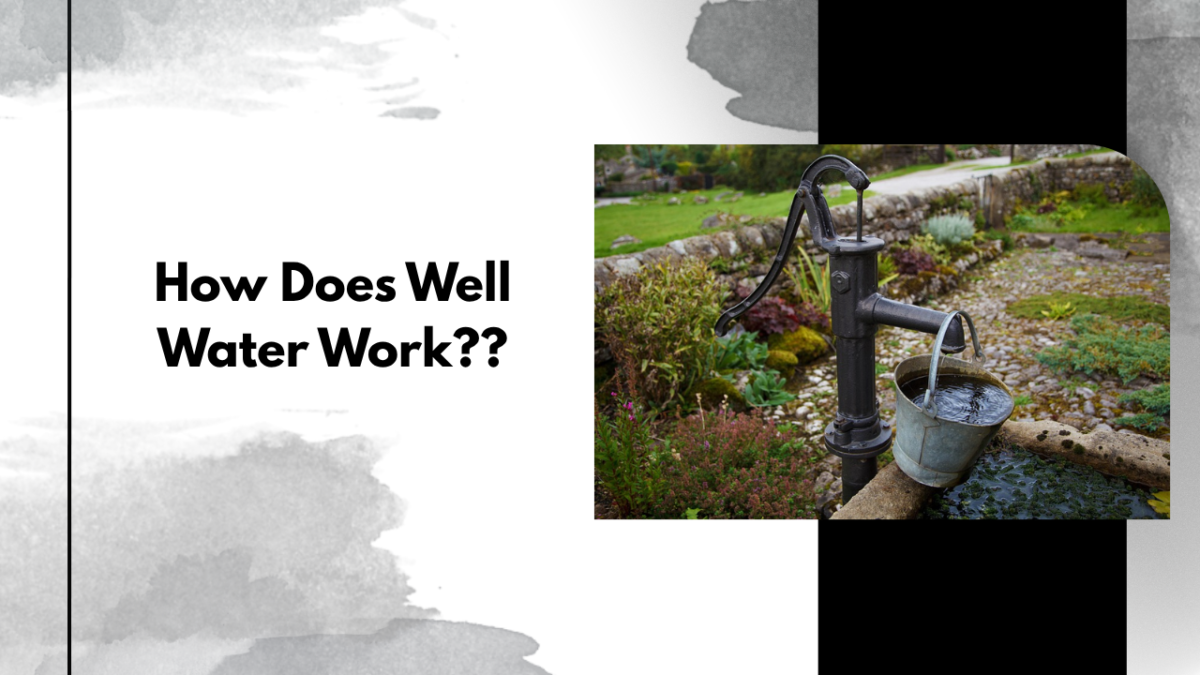
Hello guys, welcome back to my blog. A lot of you asked me how does well water work, so today I am going to break it down in simple words. In short, groundwater sits in soil and rock below your yard, and a well is just a hole that reaches down to that water so a pump can bring it up to your house.
If you just moved into a home with a private well, or you are thinking about buying one, this blog is for you. I went through real questions and answers from well owners on Reddit, plus info from USGS and other official sources, so you get a full and honest picture.
Quick Facts Table
Let me start with a simple table, so you can scan the basics fast.
| Question | Simple Answer |
|---|---|
| Where does well water come from? | Rain and snow that soaks into the ground |
| What is it stored in? | An aquifer, made of soaked sand, gravel, or rock |
| How does it reach my tap? | A pump lifts it into a pressure tank and pipes |
| Is it naturally filtered? | Yes, soil and rock filter out a lot, but not everything |
| What can still go wrong? | Bacteria, iron, hardness, or an overpumped well |
How Wells Find and Hold Water
So how does well water work from the very start? It all begins with rain.
Groundwater comes from rain and snow that soaks into the earth, little by little, over time. One person explained this in a really simple way on Reddit, they said the water goes down into the ground, every time it rains, on r/NoStupidQuestions. I think this is the easiest way to picture it, rain is basically refilling the ground like a slow tank.
That water does not just sit in one big open pool though. It fills tiny pores and cracks in soil and rock, and this whole soaked layer is called an aquifer. A commenter on Reddit cleared up a common myth about this, they said aquifers are not underground lakes, pockets of water, or underground streams, none of those actually exist, instead aquifers are usually made of loose or consolidated sand or gravel, on r/explainlikeimfive. Honestly this surprised me the first time I read it too, I always imagined a hidden lake down there.
A well is simply a hole or pipe drilled deep enough to reach that saturated layer, so water flows into it on its own. One Redditor described it in the simplest way possible, a well is simply a hole dug deep enough that it is below the water table, and therefore fills up with water, on r/explainlikeimfive. According to the USGS Water Science School’s page on water wells, the depth of a well depends completely on how deep the local water table sits, which is why wells in the same town can still vary a lot in depth.
How Water Gets To Your Tap
Once the well reaches the water, the next job is getting it up and into your house.
A pump does this work, it lifts the groundwater up from the well and pushes it into a pressure tank and your home plumbing. Someone explained this really plainly on Reddit, they said they have a pump inside the well, it pushes water up the pipe that goes deep into the ground, on r/explainlikeimfive. Most homes use what is called a submersible pump, sitting right down inside the well itself.
This also means your water depends completely on electricity, which is something a lot of new well owners don’t think about. One well owner on Reddit said it straight, no power means no water, as we have a well pump, on r/Homesteading. I think this is a big difference from city water that people should know before they buy a well house, because a storm can knock out your running water along with your lights.
Also, a well only gives water at a certain flow rate, it is not an endless supply. Someone pointed out, it can seem infinite as long as it’s not pumped out faster than it’s replenished, on r/explainlikeimfive. So if a well is overpumped, watering a huge lawn or filling a pool for example, the water level inside can drop, or in bad cases the well can even run dry for a while.
| Part | What It Does |
|---|---|
| Well casing | Pipe that keeps the hole open and dirt out |
| Submersible pump | Pushes water up from the aquifer to the surface |
| Pressure tank | Stores water and keeps steady pressure at your taps |
| Pressure switch | Turns the pump on and off automatically |
Why Well Water Is Often Clean, And What Can Go Wrong
A nice thing about how well water works is that the ground itself does a lot of the cleaning for you.
Soil and rock act like a natural filter, trapping a lot of dirt and germs as water moves down through them. One Redditor summed it up nicely, water is effectively filtered through sand and soil which trap contaminants, on r/explainlikeimfive. I think this is honestly pretty amazing, nature basically built a slow filter system before humans even showed up.
But this natural filter is not perfect, and some things still get through. Minerals like iron or hardness can stay in the water and cause stains or a weird taste. One person shared their own experience, my water is high in iron and we have hard water which I’m told is why we get the orange stains, on r/FirstTimeHomeBuyer.
Bacteria and pollution can also get into a well, especially from nearby farms, septic systems, or flooding. Someone gave solid advice on this, get the water tested by a lab for metals, agricultural runoff, and bacteria, and if you are near a flood prone area, get it retested after every major flood, on r/Homesteading. The CDC’s private well testing guidelines also say testing once a year for bacteria and nitrate is the basic minimum every well owner should follow.
Common Equipment And Treatment
Because the ground filter is not perfect, most homes on well water add some equipment of their own.
A lot of people install softeners, filters, or reverse osmosis systems, mainly for drinking and cooking water. One Redditor mentioned, a lot of people also install a reverse osmosis system in their kitchen for drinking and cooking water, on r/FirstTimeHomeBuyer.
If you ever look at a well setup and see a row of tanks, they are usually working as a small team. Someone explained their own setup, the blue tank is your pressure tank, the other 3 tanks are a water softener system, on r/Plumbing.
Regular maintenance also matters a lot, not just the equipment itself. One well owner said, routine maintenance and inspections on a system can save you thousands and a lot of heartache, and the national average life of a submersible well pump is 8 years, plan for it, on r/Homesteading. I really agree with this, a small yearly check up is way cheaper than fixing a dead pump later.
| Equipment | Main Job | Rough Cost |
|---|---|---|
| Pressure tank | Holds water, keeps steady pressure | $300–$1,200 |
| Water softener | Removes hardness minerals | $1,000–$3,500 |
| Sediment filter | Catches sand and grit | $50–$300 |
| Reverse osmosis (RO) | Extra clean drinking and cooking water | $150–$600 |
Practical Tips If You Have Or Buy A Well
Here are a few honest tips I picked up while reading through well owner discussions online.
Get a full lab water test and a proper well inspection before you buy any house with a well. One home buyer said their top priority was, water quality and quantity, on r/FirstTimeHomeBuyer, when checking out a well property. The National Ground Water Association’s well owner resources also recommend a full water test as a normal step in any home purchase with a private well.
Plan ahead for pump age and possible power outages too, since I mentioned above that pumps only last about 8 years on average. So if your pump is already old, it is smart to have a backup plan, either a generator or stored water.
Test yearly, and definitely retest after floods or big changes nearby, like I mentioned above about flood prone areas. I think this one habit alone can save well owners from a lot of health problems down the road.
A Simple Way To Remember How Well Water Works
If I had to sum up how does well water work into one simple list, it would be this:
- Rain and snow soak into the ground and fill an aquifer.
- A well is drilled down into that soaked layer of sand or rock.
- A submersible pump lifts the water up into a pressure tank.
- The pressure tank and switch send water to your taps at steady pressure.
- Soil filters a lot naturally, but you still need to test and treat the water yourself.
None of these steps are complicated on their own, you just have to remember that a well is your own private water system, nobody else is checking it for you.
FAQ On How Well Water Works
Q1: How does well water work in the most simple way? Rain fills an underground aquifer, a well is drilled into it, and a pump lifts that water up into your home plumbing.
Q2: Is a well basically an underground lake? No, this is a common myth. It is water soaked into sand, gravel, or rock, not an open pool of water.
Q3: What happens to my water if the power goes out? Most wells use an electric pump, so no power usually means no running water, unless you have a backup power source.
Q4: Is well water automatically safe because the ground filters it? No. Soil filters out a lot, but bacteria, nitrate, iron, and hardness can still get through, so yearly testing is important.
Q5: Can a well run out of water? Yes, if it is pumped faster than the aquifer can refill it, the water level can drop or the well can run dry for a while.
Final Words
So guys, this was my simple answer to how does well water work. I tried to cover the whole path, rain filling the aquifer, the well reaching it, and the pump bringing it up to your tap, plus what can go wrong and how to catch it early. Test your water every year, take care of your pump, and don’t assume clean looking water is automatically safe. Keep on visiting my blog for more simple home and water tips like this.
Sources
- Water Wells – USGS Water Science School
- Guidelines for Testing Well Water – CDC
- Water Testing Resources – National Ground Water Association / Wellowner.org
- r/NoStupidQuestions – on rain soaking into the ground
- r/explainlikeimfive – on aquifers not being underground lakes
- r/explainlikeimfive – on a well being a hole below the water table
- r/explainlikeimfive – on the pump pushing water up the pipe
- r/Homesteading – on no power meaning no water
- r/explainlikeimfive – on wells seeming infinite unless overpumped
- r/explainlikeimfive – on soil and sand filtering contaminants
- r/FirstTimeHomeBuyer – on high iron and hard water causing stains
- r/Homesteading – on lab testing for metals, runoff, and bacteria
- r/FirstTimeHomeBuyer – on installing an RO system for drinking water
- r/Plumbing – on a pressure tank and softener tank setup
- r/Homesteading – on routine maintenance saving thousands
- r/FirstTimeHomeBuyer – on checking water quality and quantity before buying