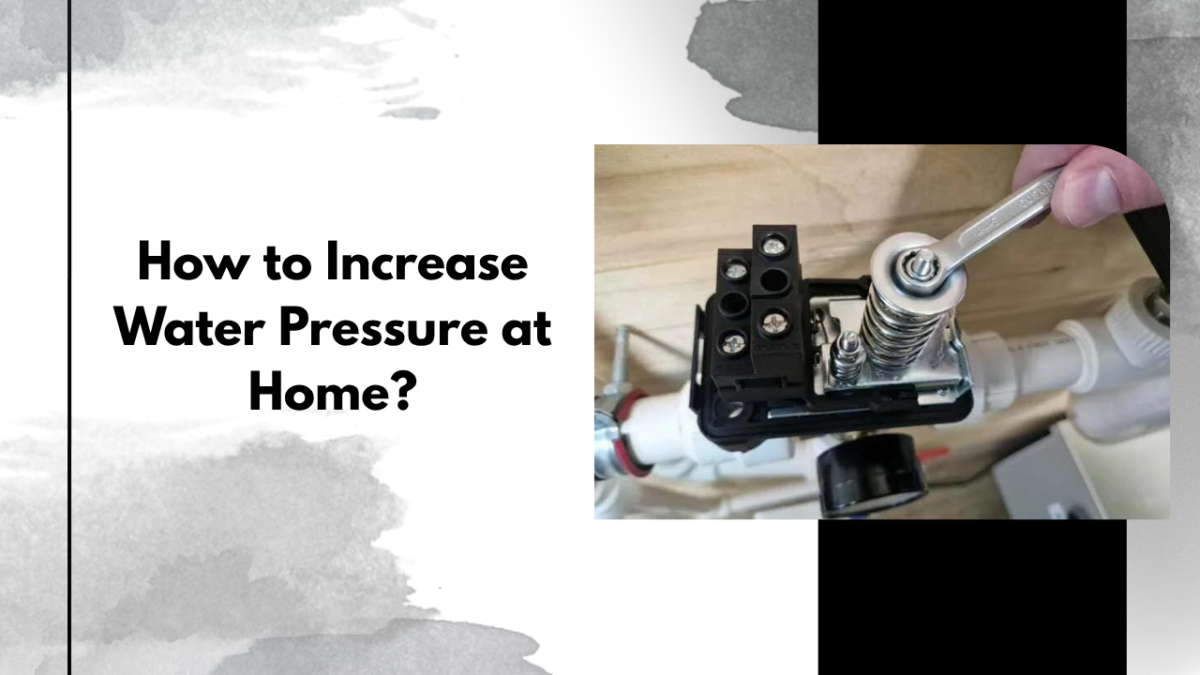
Hello guys, welcome back to my blog. Today I am going to tell you about how to increase water pressure, because weak shower and slow taps is one of the most annoying thing in a home, if you ask me. I read a lot of real experience shared by homeowners on Reddit, and I mixed that with facts from trusted plumbing sources, so this guide should cover almost every situation.
Before you go and spend money on a pump or start digging up pipes, there are few small checks you can do first. I always say start small, then go bigger only if small fix don’t work. So let’s understand how to increase water pressure step by step, in simple words.
Quick Facts Before We Start
I like to put a small table first, so you get the full picture in one look before reading long paragraphs.
| Fact | Detail |
|---|---|
| Normal home water pressure | 45 to 60 psi is considered ideal by most plumbers |
| Common shower-only cause | Clogged head, flow restrictor, or bad diverter |
| Common whole-house cause | Low municipal supply, bad PRV, or weak well pump |
| First thing to check | Shower head and any flow restrictor inside it |
| Free fix | Cleaning mineral buildup with vinegar |
| Paid fix if needed | Booster pump, usually costs few hundred dollars and up |
How to Increase Water Pressure in Shower: Try These First
If it’s only your shower that feels weak and rest of the house is fine, don’t jump to big fixes yet. Most of the time problem is sitting right there in the shower head itself.
First thing, take off the shower head and look inside. A Redditor on r/Plumbing explained this really well, saying to unscrew the grey water line from the shower sprayer and look inside for a white disk, then remove the rubber ring. That white disk is basically blocking a lot of your flow, so taking it out can make a real difference. Mineral buildup is also a big reason for weak flow, and I think Bob Vila’s guide on cleaning a shower head explains this nicely, soaking the head in vinegar loosens up all that calcium build up without any harsh chemical.
Second thing, check for a flow restrictor, sometimes called water saver. One person on r/howto put it very simple, saying there is a small filter that reduces the water flow to save water, and taking out this “water saver” from the shower head helps a lot. Honestly this one small plastic piece causes more complaints than people realize.
Third, check your diverter and tub spout for leaks. If water is still dripping out of the tub faucet even when shower is on, that means pressure is escaping from the wrong place instead of going up to your shower head. Same thread on r/howto had good advice here too, someone mentioned that if water is still coming out of the faucet when in shower mode, you probably need a new diverter. This is a cheap part, so worth checking before anything else.
Step One: Confirm It’s a Whole-House Problem
If cleaning the shower head don’t fix it, or if other taps in the house also feel weak, now we move to whole-house checks. This is the real starting point for how to increase water pressure across the entire home, not just one fixture.
Before doing anything else, confirm your problem is actually pressure and not volume, because these are two different things. On r/askaplumber, one comment made this point really clear, saying to confirm your issue is low pressure, not low volume, because fixing the wrong problem wastes your time and money. Attach a simple gauge to an outside hose bib and get an actual number, don’t just guess by feel.
Check the Pressure Reducing Valve (PRV)
Most homes on city water have a small valve called a PRV near where the main line comes in, and this part controls how much pressure flows into your house. If your reading is too low, this valve might be the reason.
I already wrote a full guide on this on my blog, but quickly, a Redditor on r/askaplumber said it’s a pretty easy swap to replace your PRV as long as there’s a union on the pipe, which means even a partly handy homeowner can attempt it. If you are not comfortable opening it up, Moen’s guide on pressure reducing valves explains what a normal working PRV should look like, so you at least know what you are dealing with before calling a plumber.
If You Are on Well Water, Check the Pressure Tank
Well systems work bit different than city water, and here the pressure tank is usually the main character in this story. If your pressure drops fast right after you turn on a tap, tank is probably the first place to look.
One homeowner shared their whole story on r/Plumbing, and it turned out a large part of their problem was an air leak in the pressure tank. Same thread had another comment explaining that when a tank is too small or going bad, your pressure tank runs out quickly and the pump is not powerful enough after it kicks on due to total pressure drop. I think this is a very underrated problem, people blame the pump first, but tank is often the real reason. If you want to understand correct tank size for your home, Water Systems Council’s guide on sizing a pressure tank has some good basic numbers to compare against.
When a Booster Pump Makes Sense
Sometimes none of the small fixes work, and that’s because your actual supply pressure coming into the house is just low, and no amount of cleaning or adjusting can create pressure that isn’t there in the first place.
A comment on r/Plumbing was pretty direct about this, saying if your pressure is always that low, then a pump is your only option. I agree with this, there is no free fix once you rule out clogs, valves and tanks. For well systems specifically, someone on the same thread I mentioned above explained you can increase the pressure differential, or add a variable speed or jet pump to deliver the water faster. If you want to see the actual install process, This Old House’s guide on installing a water pressure booster walks through it step by step, and Angi’s article on booster pumps is good for understanding rough cost before you call anyone out.
Small Things That Make a Big Difference
Before we finish, let me add few more small checks that people often forget, but they matter a lot in real life.
Check your mixing valve screens if only hot or only cold side feels weak. Someone on r/maintenance mentioned this happens all the time, saying mixing valve screens getting clogged happens all the time at their property. It’s a tiny screen, easy to miss, easy to clean.
Also don’t underestimate just buying a better shower head. One Redditor on r/Plumbing decided to go simple route and said they were putting on a new shower head that’s supposed to simulate higher pressure to see how that works. Sometimes the cheapest fix really is the best one, if you ask me.
Common Causes and Fixes at a Glance
| Problem | Likely Cause | Simple Fix |
|---|---|---|
| Only shower is weak | Clogged head, flow restrictor, bad diverter | Clean, remove restrictor, or replace diverter |
| Only hot or only cold weak | Clogged mixing valve screen | Clean the screen |
| Whole house weak, city water | Low PRV setting or worn PRV | Adjust or replace PRV |
| Whole house weak, well water | Waterlogged or undersized pressure tank | Repair or resize tank |
| Pressure always low, no matter what | Low supply, undersized system | Install a booster pump |
FAQ on How to Increase Water Pressure
Q1: What is the fastest way to increase water pressure in shower? Take off the shower head, remove any flow restrictor disk, and clean out mineral buildup. This alone fixes a lot of cases.
Q2: How do I know if it’s pressure problem or volume problem? Check pressure with a gauge at an outside hose bib. If number is low there too, it’s a real pressure problem, not just one clogged fixture.
Q3: Is low water pressure always the PRV’s fault? No, not always. It can also be the well pump, pressure tank, old pipes, or even just a dirty shower head. Check the easy stuff first.
Q4: Do I need a plumber to increase water pressure? Small stuff like cleaning shower head or checking restrictor, you can do yourself. But PRV replacement, tank repair or booster pump install, I always say call a licensed plumber for that.
Q5: How much does a booster pump cost? It depends on your home size and pump type, but according to Angi’s guide, it usually runs from a few hundred dollars up to over a thousand for bigger systems.
Final Words
So guys, this was my simple guide on how to increase water pressure, both for your shower and for the whole house. I tried to cover the small free fixes first, then move up to PRV, pressure tanks, and finally booster pumps for when nothing else works. Start small, test as you go, and only call in the big guns like a booster pump when you really need it. Keep on visiting my blog for more simple home tips like this.
Sources
- r/Plumbing – on removing the white disk and rubber ring inside a shower head
- How to Clean a Shower Head and Remove Mineral Buildup – Bob Vila
- r/howto – on removing the water saver flow restrictor
- r/howto – on replacing a leaking diverter
- r/askaplumber – on confirming pressure versus volume
- r/askaplumber – on swapping a PRV with a union
- Pressure Reducing Valves (PRV) FAQ – Moen
- r/Plumbing – original post on an air leak in the pressure tank
- r/Plumbing – on a small tank running out quickly
- Sizing a Pressure Tank – Water Systems Council
- r/Plumbing – on a pump being the only option for always-low pressure
- r/Plumbing – on variable speed or jet pumps for well systems
- How To Install a Water Pressure Booster – This Old House
- What Is a Booster Pump and How Does It Work – Angi
- r/maintenance – on clogged mixing valve screens
- r/Plumbing – on buying a higher-performance shower head