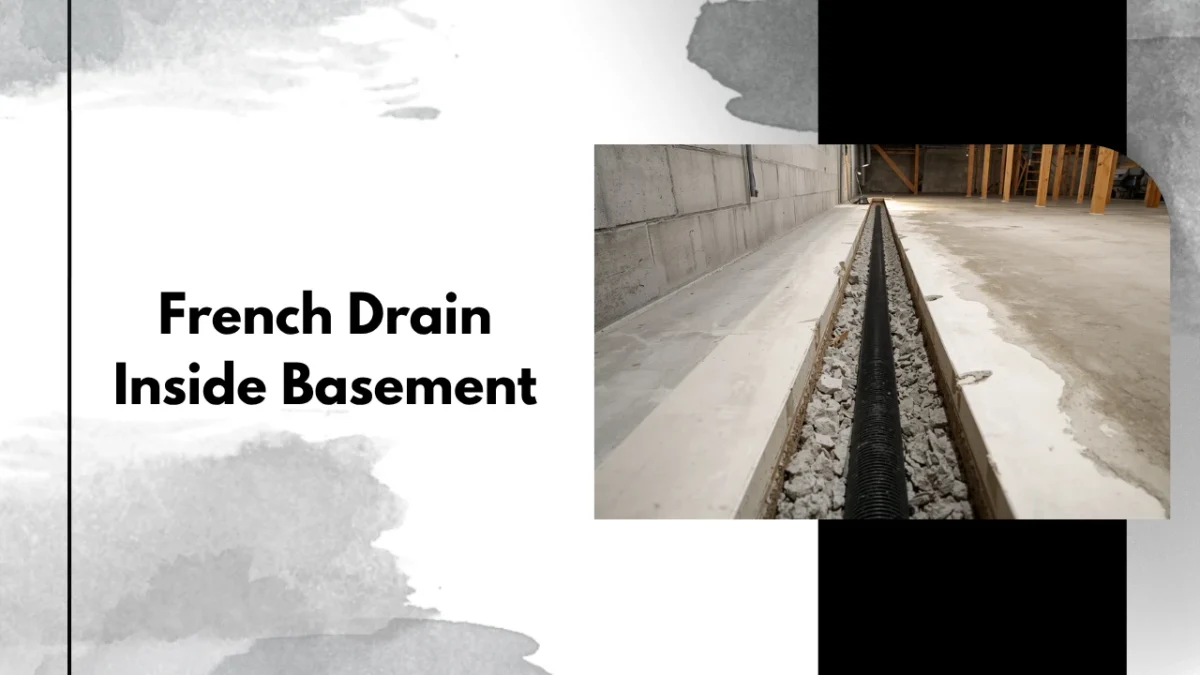
Hello guys, welcome back to my blog. Today I am going to talk about a french drain inside basement, because so many homeowners deal with water creeping across their floor and don’t really know what is actually happening down there. If your basement gets a little wet after every big rain, or you are thinking about hiring someone to fix it, this blog is for you.
A french drain inside basement is a system that catches water after it has already gotten past your foundation wall, and it moves that water to a sump pump before it can spread across your floor. I went through a lot of real talk from homeowners on Reddit to bring you honest info on this, not just sales talk from a waterproofing company.
Quick Facts Table
Let me give you a quick table first, because I always like tables. It is easy to understand everything at one glance.
| Point | Interior French Drain | What It Actually Does |
|---|---|---|
| Where it sits | Trench dug along the inside edge of the basement floor | Collects water that already got past the wall |
| What it is made of | Perforated pipe, gravel, filter fabric | Lets water in, keeps dirt out |
| Where water goes | To a sump pump pit | Pump pushes it out and away from the house |
| Does it stop water entry | No | It manages water, it don’t block it at the wall |
| Helps with hydrostatic pressure | Yes | Relieves the pushing force of water against your walls |
How a French Drain Inside Basement Actually Works
Let me explain the basic process, because a lot of people don’t really know what is happening under their floor once the work starts.
Contractors dig a trench around the inside perimeter of your basement, lay the pipe, and connect it to a sump pump. As one homeowner on Reddit described the full process, you jackhammer part of the floor out, place the drain in the trench, cover it with gravel, drill weep holes into the foundation, cover the weep holes with drain mat, and let it all divert water to the drain before it leads to a sump pump, shared on r/homeowners. I think this is honestly the clearest step by step explanation I have seen, because it covers everything from the weep holes to the final pump in one go.
Those weep holes matter more then people think. They are small holes drilled low in the foundation wall so water trapped inside the block can actually reach the drain instead of just sitting there. EPP Concrete has a good explainer on how basement weep holes work if you want to understand this part better, since it is honestly a step a lot of homeowners never even hear about until the work is already happening.
Hydrostatic Pressure: The Real Reason You Need This
A french drain inside basement is not just about catching puddles, it is also about relieving pressure. This part is honestly the most important thing to understand, if you ask me.
When the soil around your foundation gets soaked, water pushes against your basement walls with real force, this is called hydrostatic pressure. One Redditor summed it up simply, saying the drain takes care of the hydrostatic pressure, shared on r/HomeMaintenance. I think that is a very honest way to put it, the drain don’t stop water from pushing on your wall, but it gives that water somewhere to go instead of building up pressure that can crack your foundation over time.
Groundworks has a solid guide explaining what hydrostatic pressure actually is and why it causes so much basement damage, and I think it is worth a read if you want to understand why your walls are bowing or cracking in the first place.
Not a Complete Fix, Just Management
Here is something I think every homeowner should hear before they spend the money, a french drain inside basement manages water, it don’t stop water from entering your home in the first place.
One Redditor explained it really well, saying a French drain, if put in right, will really help with your water problem, but it won’t solve it completely, because you are just moving the water to a place you can handle it, not stopping it from getting in, shared on r/HomeMaintenance. I really agree with this, honestly this is the single most important thing to understand before you sign a contract for this kind of work.
Problems That Can Show Up Later
Even a good french drain inside basement can run into issues down the road, so let me walk you through the common ones.
Clogging is a big one. Drains can clog over time, specially if they are installed directly in dirt without proper gravel and filter fabric wrapped around them. Green Building Advisor has a useful discussion on preventing filter fabric from clogging around foundation drains, and I think this is worth reading before you even hire a contractor, so you know what to ask them about.
Humidity can also stick around even after the drain is installed. An internal french drain manages bulk water, but humidity in an older basement is often about air infiltration or vapor drive through old masonry, not the drain failing at all. Building Science has a detailed guide on understanding basements that explains this vapor drive issue really well, and honestly it changed how I think about basement moisture, it is not always just about bulk water.
Bad pitch is another issue people run into. If the drain isn’t installed with the right slope, or it doesn’t sit parallel to the footing, water can pool instead of flowing to the sump pump, and that pooling water just sits in contact with your concrete the whole time. This is exactly why I always tell people, don’t just hire the cheapest bid, ask how they check the pitch of the pipe before they close it up.
Exterior Fixes: Why They Still Matter
A lot of Redditors push back on jumping straight to an interior fix, and honestly I think they have a point.
Redirecting downspouts away from the foundation and fixing your yard’s grading can cut down water intrusion a lot before it ever becomes a basement problem. One homeowner put it simply, before you try fixing the problem inside, you should try getting rid of the water outside that’s causing all the pressure, shared on r/HomeMaintenance. I think this order of operations matters, fix the cheap stuff outside first, then decide if you still need interior work.
Sealing exterior walls is the bigger version of this fix. Digging around the foundation, sealing cracks, and applying a waterproof coating or dimple board can genuinely stop water at the source instead of just managing it once it is inside. This Old House has a clear DIY guide on sealing basement walls that walks through this process step by step, and I think it is a good read even if you end up hiring a pro for the actual digging.
For bigger or more stubborn water problems, a combination of interior and exterior work is often needed, and getting an honest opinion first really helps. One Redditor put it best, saying you don’t need another waterproofing sales company, you need a neutral assessment from a building science consultant, a licensed home inspector who does moisture diagnostics, or an independent structural engineer, shared on r/basement. Angi has a helpful guide on what a structural engineer foundation inspection actually covers, and I think this is smart advice, specially if you already spent money on one fix that didn’t fully work.
Cost of a French Drain Inside Basement
Cost is always the big question, so here is a simple table with rough numbers to give you an idea before you start calling contractors.
| Job Details | Rough Cost |
|---|---|
| Interior french drain, per linear foot | $50–$150 |
| Average full basement interior drain job | $8,000–$15,000+ |
| Sump pump added to the system | $600–$3,000 |
| Simple exterior grading fix, before going interior | $300–$1,500 |
Fixr has a full French Drain Installation Cost guide that breaks this down further by linear foot and by interior versus exterior setups, which I think is useful before you get quotes. Prices really do swing a lot between companies for basically the same job, so get at least two or three quotes before you sign anything.
Maintenance Tips for Your Interior French Drain
Whatever system you end up with, don’t install it and forget about it completely.
Check your sump pump before every rainy season, test the battery backup if you have one, and clean the pit at least once a year. Walk around your yard after a big storm too, and see where water is actually pooling, because grading can shift over the years even if it worked fine before. I think this one habit alone, honestly, prevents a huge chunk of basement problems before they even start.
FAQ on French Drain Inside Basement
Q1: What is a french drain inside basement? It is a trench and pipe system built along the inside edge of your basement floor that collects water and sends it to a sump pump, instead of letting it sit on your floor.
Q2: Does an interior french drain stop water from entering my basement? No, it don’t stop water at the wall. It manages water after it already got in, which is why a lot of homeowners pair it with exterior fixes too.
Q3: Why do interior french drains clog? Mostly because they were installed directly in dirt without gravel and filter fabric around the pipe. Ask your contractor exactly how they are protecting the drain from clogging.
Q4: Should I fix the outside of my house before going interior? A lot of Redditors and experts say yes, fix grading and downspouts first if you can, since it is cheaper and stops water before it ever reaches the wall.
Q5: How much does a french drain inside basement cost? Based on rough numbers, most interior jobs run somewhere between $8,000 and $15,000 or more, depending on the size of your basement and where you live.
Final Words
So guys, this was my simple guide on french drain inside basement systems. I have tried to cover how it works, hydrostatic pressure, common problems like clogging and humidity, why exterior fixes still matter, and rough cost numbers too. None of this is very hard to understand once you break it down, you just have to figure out if your problem needs interior work, exterior work, or honestly both. Keep on visiting my blog for more simple home tips like this.
Sources
- Basement Weep Holes: How They Work And Why – EPP Concrete
- What is Hydrostatic Pressure? – Groundworks
- BSD-103: Understanding Basements – Building Science
- Preventing Landscape Filter Fabric From Clogging – Green Building Advisor
- DIY Guide: How To Seal Basement Walls – This Old House
- What Is a Structural Engineer Foundation Inspection? – Angi
- French Drain Installation Cost – Fixr
- r/homeowners – on the full jackhammer-to-sump-pump install process
- r/HomeMaintenance – on interior drains relieving hydrostatic pressure
- r/basement – on getting a neutral assessment before more waterproofing work