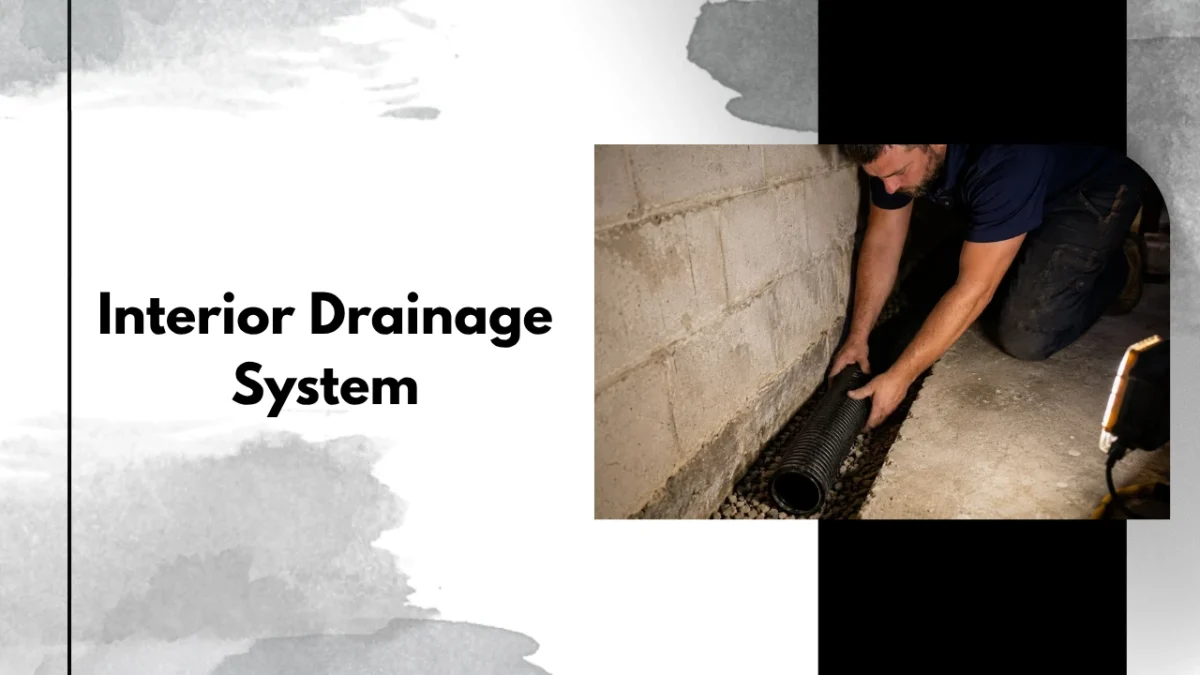
Hello guys, welcome back to my blog. Today I am going to talk about interior drainage system, because so many homeowners deal with a wet basement and don’t really know what to do about it. If your basement floor gets damp or a little water shows up every time it rains hard, this blog is for you.
An interior drainage system don’t stop water from entering your house, it just manages the water once it is already inside and sends it away through a sump pump. I went through a lot of real talk from homeowners on Reddit to bring you honest info on this, not just sales talk from a waterproofing company.
Quick Facts Table
Let me give you a quick table first, because I always like tables. It is easy to understand everything at one glance.
| Point | Interior Drainage System | Exterior Drainage System |
|---|---|---|
| Where the work happens | Inside, along the basement floor | Outside, around the foundation |
| Stops water from entering walls | No, it manages water after it gets in | Yes, it blocks water before it reaches the wall |
| Landscaping disturbance | Very little | Yard gets dug up completely |
| Typical cost | Usually cheaper | Usually more expensive |
| Sump pump needed | Yes, almost always | Not always |
| Best for | Existing homes, tighter budget | New builds or full foundation repair |
Interior vs Exterior: What Reddit Homeowners Say First
Before you pick an interior drainage system, I think it is worth knowing what people who actually deal with wet basements say. Most of them agree on one thing first.
Address water at the source, that is what a lot of Redditors say is the ideal way to think about basement waterproofing. You want to prevent the water from coming in in the first place, one person explained on r/homeowners, and honestly I agree with this, prevention is always better.
If you have access to your yard, regrading is usually the first fix people suggest. The best and cheapest solution is regrading outside of the house, one Redditor wrote, if you have the access to do it, r/homeowners. This makes sense to me because water always follows gravity, so if the ground slopes away from your house, less water even reaches the wall.
But interior systems still have a place, specially when exterior work is not possible. Some homeowners see it as a backup plan rather than a full fix, since interior drainage still creates a damp musty basement even if it never floods, one person pointed out on r/homeowners. I think this is fair, an interior drainage system manages water, it don’t make your basement bone dry like a real waterproofing job would.
For a full breakdown of both methods side by side, This Old House has a solid basement waterproofing guide that covers when each option makes sense.
How an Interior Drainage System Actually Works
Now let me explain the actual process, because I think a lot of people don’t know what is happening under their basement floor.
The basic idea is you break out a strip of concrete around the edge of your basement, dig a trench, and put the drain pipe inside it. One Redditor described it well, saying it is an interior sub-floor and wall drainage system, where you dig a trench, fill it with perforated piping, line the bottom with filter fabric, and add gravel on top, r/HomeImprovement. The same person also mentioned weep holes get drilled in the base of the walls, and finally the floor gets cemented back over, with a sump pump added at the end to push the collected water out.
Some companies also add extra protection on the walls themselves. A few systems include a membrane covering the walls that acts like a moisture barrier, one Redditor shared on r/centuryhomes, and sometimes contractors also offer mold treatment if the wall already has some growth on it. If you ask me, this membrane step is a small extra cost that is worth asking about, specially in an older home.
If you want to see exactly how the pipe and weep hole part connects together, Basement Systems has a clear explanation of how a French drain style interior system moves water to the sump pump. I think seeing the diagram helps a lot, because just reading about weep holes and trenches can be confusing at first.
Cost of an Interior Drainage System
Cost is always the big question, so here is a simple table based on real numbers homeowners shared, plus some general guide numbers.
| Job Details | Cost Reported | Notes |
|---|---|---|
| 118 linear ft, Michigan | $8,000 | Homeowner paid this for the full job |
| 110 linear ft | $10,000 | Included battery backup sump pump and new discharge pipe |
| Same house, two quotes | $22,000 vs $32,000 | Big price gap between two different companies |
| National average | Varies a lot by region | See HomeGuide’s cost breakdown below |
An interior drainage system for a normal size basement usually lands somewhere in the thousands, not hundreds, so this is not a small purchase. HomeGuide’s drainage system installation cost guide breaks this down further by linear foot and region, which I think is useful before you call any company.
Prices can also swing a lot between contractors for the exact same job. Both said they’d do basically the same thing, but one said it would be 32K, and the other said they’d do it for 22K, one Redditor shared, r/centuryhomes. This is why I always tell people, get at least two or three quotes before you sign anything, because the difference can be huge.
The good part is, most reputable companies back their interior drainage system with a strong warranty, so it is not like you are just gambling your money away. Ask about this directly, and don’t be shy to compare warranty length between companies too.
Problems You Might Run Into
An interior drainage system is not always perfectly smooth after install, so let me tell you about a few common issues.
Small cracks in the new concrete are actually pretty normal. When someone asked if a tiny crack near the seam was a problem, other Redditors said that’s normal, r/basement. Concrete does shrink a little as it cures, so a hairline crack by itself usually isn’t something to panic about.
Dampness at the seam between old and new concrete is another thing people notice. One homeowner said the seam between the old concrete and new is regularly damp like this, on r/basement, and other people in the same thread said this can be a normal part of how the system breathes and drains. I think it is worth keeping an eye on though, and asking your installer if a large or growing damp patch is expected or not.
Keeping It Working: Maintenance Tips
Whatever you do, don’t install an interior drainage system and then forget about it completely.
Servicing it once a year makes a real difference. We also have them service it annually, just to inspect it for clogs and check over the sump pump, one Redditor shared, r/HomeMaintenance. I think this one habit alone can save you from a nasty surprise during the next big storm.
Since the sump pump is doing all the heavy work at the end of this system, keeping it in good shape matters a lot. Angi has a simple sump pump maintenance checklist that covers testing it, cleaning the pit, and checking the battery backup, and I think every homeowner with one of these systems should go through it at least once a year.
Moisture management also matters for your health, not just your house. The EPA’s guide on mold and moisture in your home explains why keeping humidity down really matters, specially in a basement with any kind of drainage system running below it. So don’t just think of maintenance as protecting your floor, think of it as protecting your air too.
FAQ on Interior Drainage Systems
Q1: What is an interior drainage system? It is a system installed inside your basement, usually along the floor edge, that collects water and sends it to a sump pump instead of letting it sit on your floor.
Q2: Is an interior drainage system better than an exterior one? Not exactly better, just different. Exterior systems stop water before it enters, an interior drainage system manages it after it gets in, and it is usually cheaper and less disruptive to your yard.
Q3: How much does an interior drainage system cost? Based on real numbers from homeowners, most people pay somewhere between $8,000 and $32,000, depending on linear footage, region and the company you pick.
Q4: Do I need a sump pump with an interior drainage system? Yes, almost always. The whole system depends on the sump pump to actually remove the water it collects, so this is not optional.
Q5: Can small cracks after installing an interior drainage system be normal? Yes, small hairline cracks in new concrete are common and usually not a big deal. But if you see a big crack or a lot of water, get it checked.
Final Words
So guys, this was my simple guide on interior drainage system for a wet basement. I have tried to cover how it works, real cost from actual homeowners, common problems and simple maintenance tips. None of this is very hard to understand once you break it down, you just have to decide if it fits your budget and your basement’s needs. Keep on visiting my blog for more simple home tips like this.
Sources
- Basement Waterproofing 101: A Comprehensive Guide – This Old House
- French Drain vs. WaterGuard Interior Drainage System – Basement Systems
- Drainage System Installation Cost Guide – HomeGuide
- 9 Sump Pump Maintenance Tips – Angi
- A Brief Guide to Mold, Moisture and Your Home – US EPA
- r/homeowners – on preventing water at the source
- r/homeowners – on regrading as the cheapest fix
- r/homeowners – on interior drainage still causing a damp basement
- r/HomeImprovement – on trenching and weep hole installation
- r/centuryhomes – on wall membrane and mold treatment
- r/centuryhomes – on getting very different quotes for the same job
- r/basement – on small concrete cracks being normal
- r/basement – on dampness at the concrete seam
- r/HomeMaintenance – on annual servicing of the system